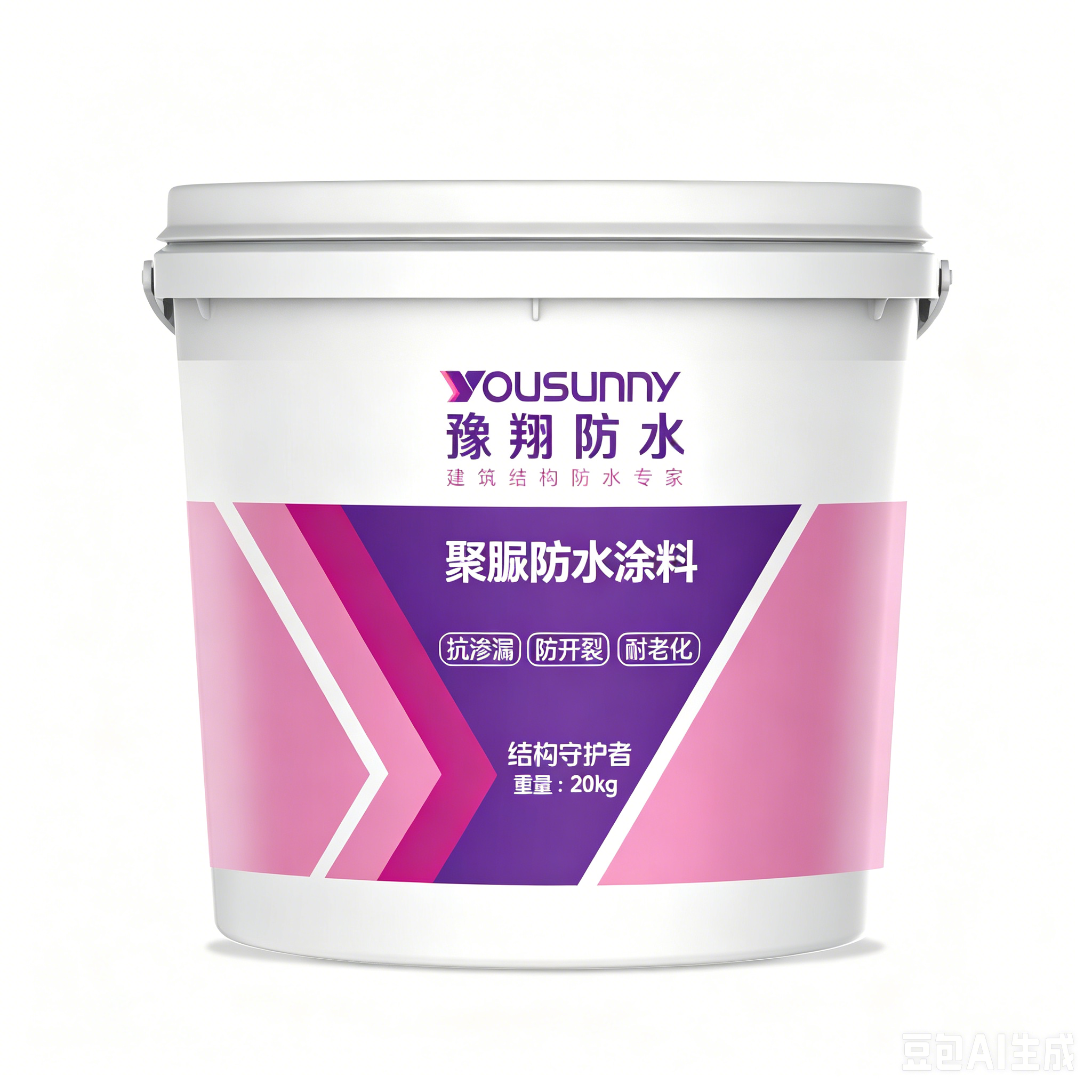
Product Applications
Widely used in waterproofing projects for roofs, basements, kitchens, bathrooms, water reservoirs, swimming pools, rooftop gardens, subways, and tunnels, as well as for joint sealing in roads, bridges, and dams. It is highly effective for waterproofing critical details such as pipe penetrations, drainage outlets, and wall corners.
Application Method
Substrate Requirements: The substrate must be level, dry, clean, and free of oil or grease. Any oil or grease must be removed using a solvent such as xylene or gasoline before application.
· Primer Application: Thoroughly mix the product components and solvent in a ratio of 1:2:2 (Component A : Component B : Solvent) until uniform. The recommended application rate is 0.2 kg/m².
· Waterproofing Layer Application: Thoroughly mix the product components in a 1:2 ratio (Component A : Component B); add solvent if the mixture is too viscous. Apply using a brush or roller.
Apply in multiple thin coats to ensure uniform thickness and minimize air bubbles; the recommended application rate per coat is 0.5–0.8 kg/m².
· Protective Layer Application: Carry out in accordance with design specifications.
Application is permissible on damp surfaces.
Precautions:
· Store this product in a sealed container in a cool, dry place; the shelf life is one year.
· Do not dilute this product with alcohol-based solvents (such as ethanol) or commercially available rubber thinners; use toluene, solvent naphtha, butyl acetate, or 93-octane gasoline for dilution.
· If skin, clothing, or equipment becomes contaminated with the material, clean immediately using solvents such as toluene or alcohol.
· Protect against moisture and water sources during transportation, application, and storage.
· Sedimentation is normal; stir well before use.