
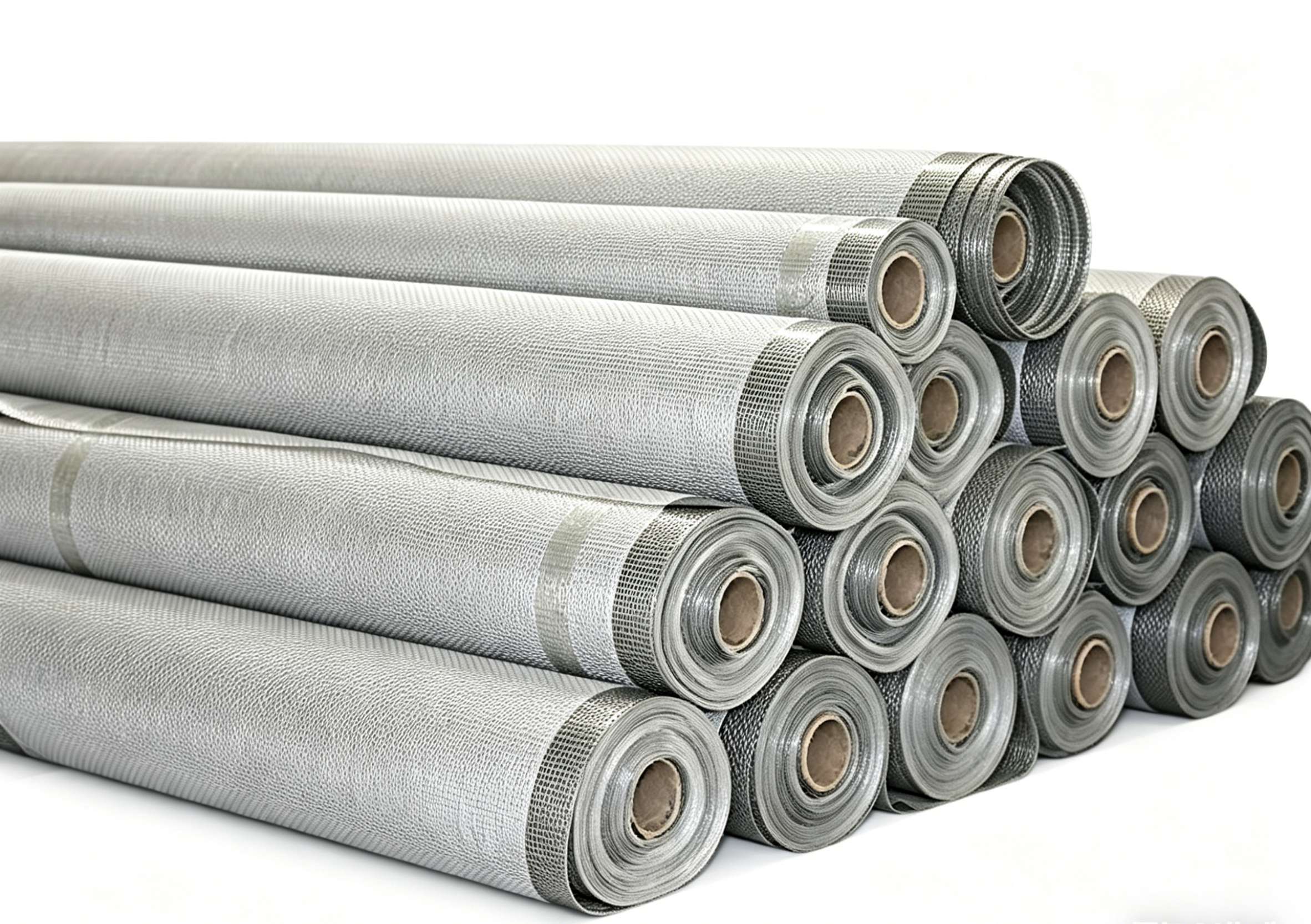
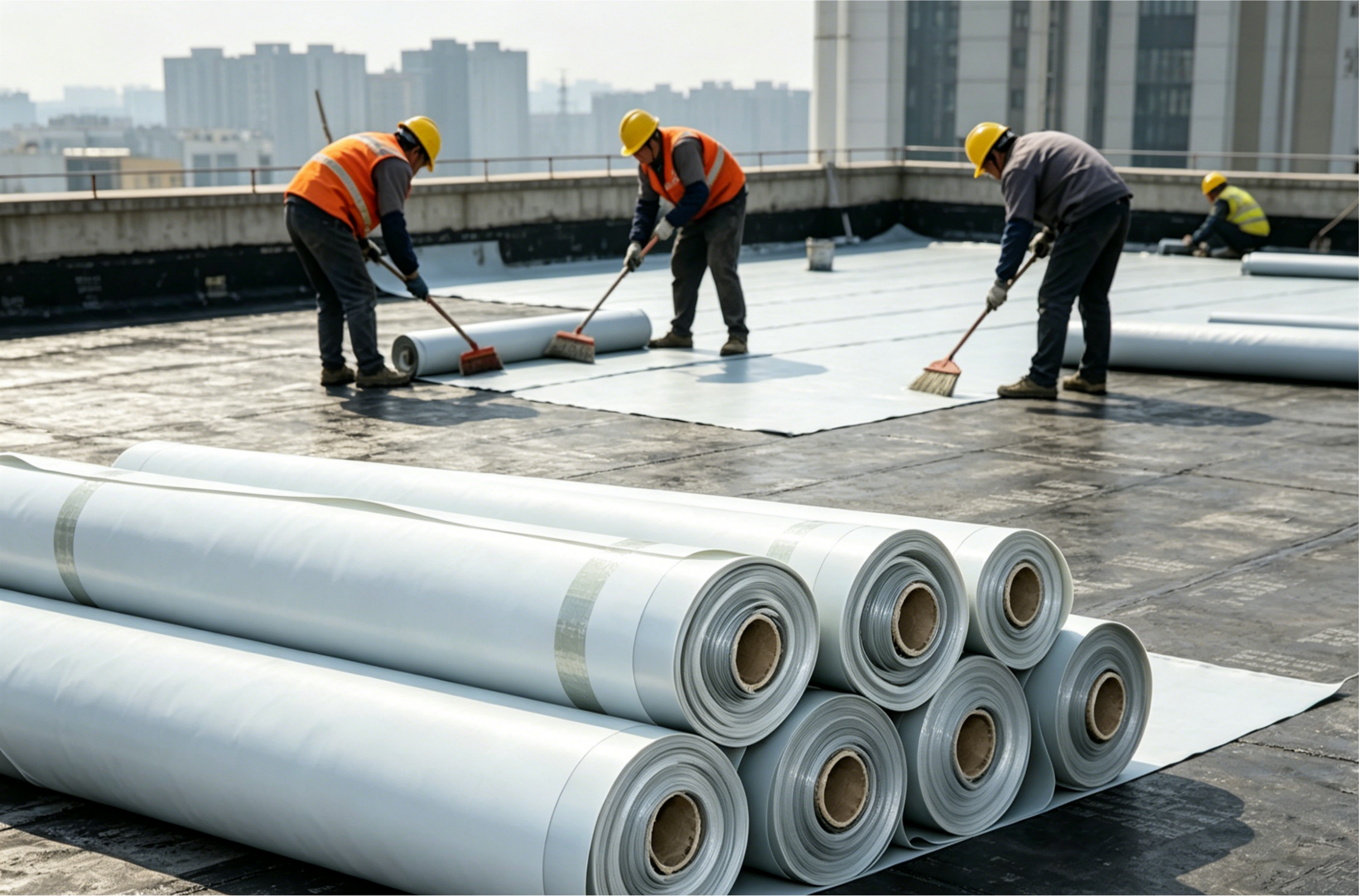
Polyvinyl chloride (PVC) waterproofing membrane
Polyvinyl chloride (PVC) waterproofing membrane is a high-performance polymer waterproofing material manufactured using advanced equipment and processes, incorporating various specialized additives and anti-aging components. It features high tensile strength, high elongation, low shrinkage, excellent low-temperature flexibility, and a long service life. Available widths include 1.05m, 2.05m, and 2.10m, with thicknesses of 0.8mm, 1.0mm, 1.2mm, 1.5mm, and 2.0mm (special specifications available upon request); the product offers stable performance, reliable quality, and ease of installation.
Product Features
★ Long service life and excellent aging resistance; the material lasts over 20 years for roofing applications and up to 50 years for underground applications.
★ High tensile strength and elongation; minimal dimensional change after heat treatment.
★ Good low-temperature flexibility; adapts well to ambient temperature fluctuations.
★ Excellent resistance to root penetration; suitable for green roofing systems.
★ High puncture resistance.
★ Easy to install; weldable, secure, reliable, and environmentally friendly (pollution-free).
★ Strong chemical corrosion resistance; suitable for specialized applications.
★ Good plasticity; allows for quick and convenient detailing at corners and edges.
★ Easy to maintain; low cost.
Construction Procedures
I. Roofing Works (GB50207-2012)
Installation of PVC waterproofing membranes may only proceed after the substrate meets the national standard requirements regarding strength, thickness, and moisture content.
· Determine the layout direction and sequence for the membranes; position them naturally on the substrate following the waterproofing layer’s outline. Ensure they are flat and straight without bending, and overlap them according to the widths specified in the standards.
· Secure the membranes using the selected method (e.g., mechanical fastening, full-surface bonding, or strip bonding).
· Clean and dry the overlap areas before welding. Use hot-air welding; hold the welding nozzle at a 45° angle to the welding direction, and keep the pressure roller parallel to the nozzle at a distance of approximately 5mm. A bright-colored melt bead should be visible at the weld edge, and there should be no signs of scorching.
· Secure membrane terminations with metal pressure bars, seal with sealant, and finish with cement mortar. Upon completion of the waterproofing work, conduct a comprehensive quality inspection and address any issues. II. Underground Works (GB50208-2011)
Installation of PVC waterproofing membranes may only proceed after the substrate meets the national standard technical requirements regarding strength, thickness, and moisture content.
· Select an appropriate construction method based on the specific waterproofing location, strictly adhering to the GB50208-2011 standard.
The membrane overlap width shall be 100mm; the lower membrane shall overlap the upper membrane.
· Multiple weld lines should be used for overlaps; the width of a single weld seam shall be no less than 100mm.
| No. | Item | Unit | H | L | P | G | GL |
| 1 | Resin layer thickness on intermediate substrate | mm ≥ | — | — | 0.4 | 0.4 | 0.4 |
| 2 | Tensile Properties | ||||||
| 2.1 | Maximum Tensile Force | N/cm ≥ | — | 120 | 250 | — | 120 |
| 2.2 | Tensile Strength | MPa ≥ | 10 | — | — | 10 | — |
| 2.3 | Elongation at Maximum Force | % ≥ | — | — | 15 | — | — |
| 2.4 | Elongation at Break | % ≥ | 200 | 150 | — | 200 | 100 |
| 3 | Dimensional Change after Heat Treatment | % ≤ | 2 | 1 | 0.5 | 0.1 | 0.1 |
| 4 | Low-temperature Flexibility | — | -25℃, no cracks | ||||
| 5 | Water Impermeability | — | 0.3MPa, 2h no penetration | ||||
| 6 | Impact Resistance | — | 0.5kg·m, no penetration | ||||
| 7 | Static Load Resistance | — | — | — | 20kg, no penetration | — | — |
| 8 | Seam Peel Strength | N/mm ≥ | 4.0 or substrate failure | — | — | 3 | — |
| 9 | Right-angle Tear Strength | N/mm ≥ | 50 | — | — | 50 | — |
| 10 | Trapezoidal Tear Strength | N ≥ | — | 150 | 250 | — | 220 |
| 11 | Water Absorption (70℃, 168h) | % | |||||
| 11.1 | After water immersion | ≤ | — | — | 4 | — | — |
| 11.2 | After conditioning | ≥ | -0.4 | — | — | — | — |
| 12 | Thermal Aging (80℃, 672h) | ||||||
| 12.1 | Appearance | — | No blistering, cracking, delamination, holes | ||||
| 12.2 | Retention of Maximum Tensile Force | % ≥ | — | 85 | 85 | — | 85 |
| 12.3 | Retention of Tensile Strength | % ≥ | 85 | — | — | 85 | — |
| 12.4 | Retention of Elongation at Maximum Force | % ≥ | — | — | 80 | — | — |
| 12.5 | Retention of Elongation at Break | % ≥ | 80 | 80 | — | 80 | 80 |
| 12.6 | Low-temperature Flexibility | — | -20℃, no cracks | ||||
| 13 | Chemical Resistance | ||||||
| 13.1 | Appearance | — | No blistering, cracking, delamination, holes | ||||
| 13.2 | Retention of Maximum Tensile Force | % ≥ | — | 85 | 85 | — | 85 |
| 13.3 | Retention of Tensile Strength | % ≥ | 85 | — | — | 85 | — |
| 13.4 | Retention of Elongation at Maximum Force | % ≥ | — | — | 80 | — | — |
| 13.5 | Retention of Elongation at Break | % ≥ | 80 | 80 | — | 80 | 80 |
| 13.6 | Low-temperature Flexibility | — | -20℃, no cracks | ||||
| 14 | Artificial Weathering (1500h) | ||||||
| 14.1 | Appearance | — | No blistering, cracking, delamination, holes | ||||
| 14.2 | Retention of Maximum Tensile Force | % ≥ | — | 85 | 85 | — | 85 |
| 14.3 | Retention of Tensile Strength | % ≥ | 85 | — | — | 85 | — |
| 14.4 | Retention of Elongation at Maximum Force | % ≥ | — | — | 80 | — | — |
| 14.5 | Retention of Elongation at Break | % ≥ | 80 | 80 | — | 80 | 80 |
| 14.6 | Low-temperature Flexibility | — | -20℃, no cracks |
For Immediate Assistance, Please Contact us Now!
Contact Us
- 24-hour online service
- Own factory processing


