
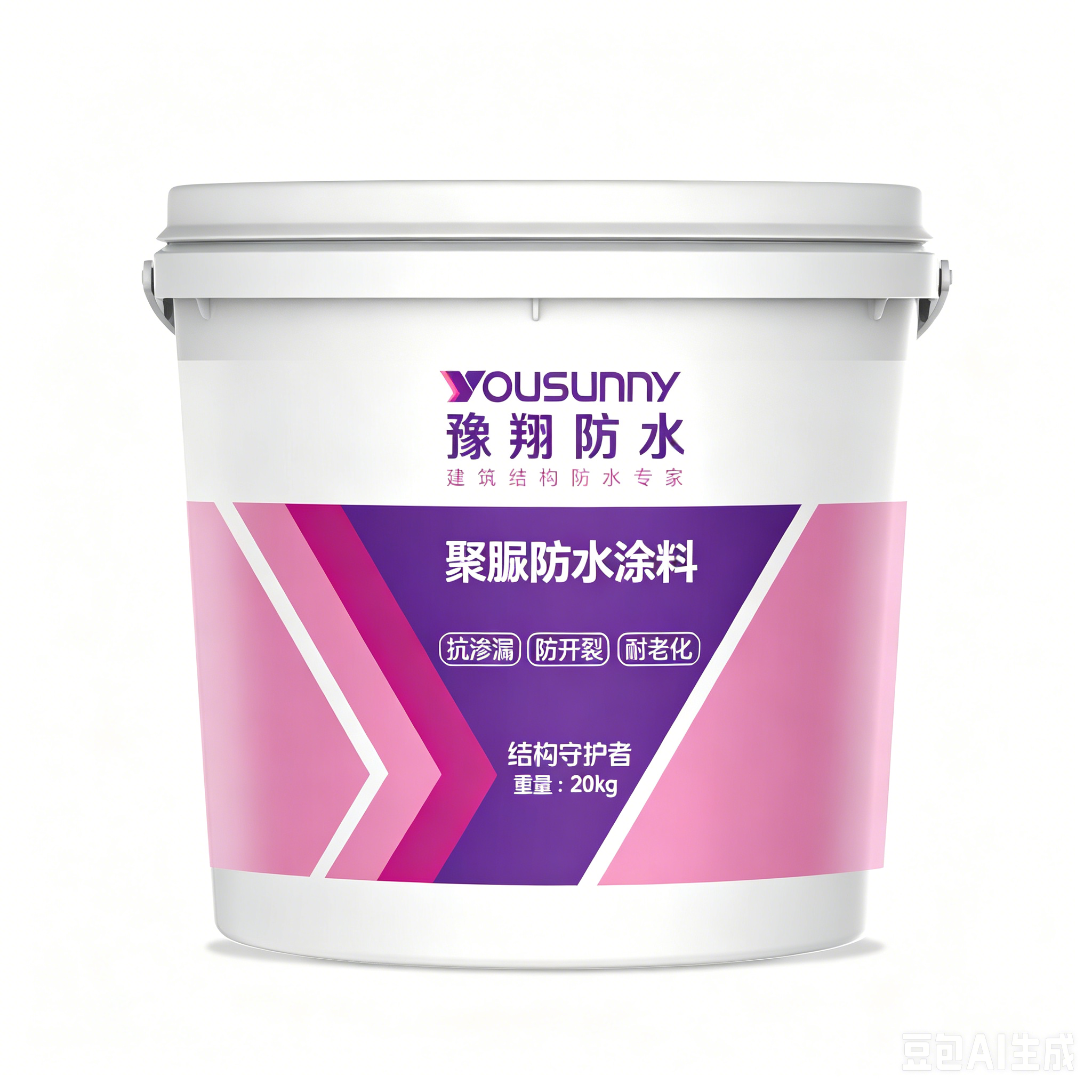
Non-solvent single-component polyurethane waterproof coating
Single-component water-based multi-colored polyurethane waterproof coating is a new type of waterproofing material encouraged by the state. Due to its excellent performance, ease of application, reliable waterproofing results, and long service life, it is widely used in various waterproofing and anti-seepage projects. Formulated using VAE and acrylic copolymer emulsions as base materials and modified through a specialized process, this coating combines the high elasticity of organic materials with the superior durability of inorganic materials; its comprehensive performance ranks among the best of similar domestic products. It has been certified as a recommended product by the China Construction Industry Association.
Applications
Roofing: Suitable for various new and existing flat or pitched roofs, as well as gutters and eaves; particularly effective for waterproofing and preventing seepage in irregularly shaped areas. Above-ground structures: Waterproofing and moisture-proofing for bathrooms, kitchens, water pools, and exterior walls. Underground structures: Interior and exterior walls, base slabs, underground tunnels, elevator pits, etc. Can be used in conjunction with various waterproofing membranes or coatings to enhance waterproofing performance and extend service life; when combined with SBS waterproofing membranes, the waterproofing effect can last over 25 years.
Material Characteristics: Water-based, single-component, color-customizable, non-toxic, and odorless; easy to apply and environmentally friendly. Upon curing, it forms a seamless, monolithic rubber-plastic layer characterized by high elongation and high tensile strength, ensuring excellent waterproofing performance. Applied in liquid form at ambient temperature without seams, it offers distinct advantages for complex structural shapes and sites where open flames are prohibited. Features high solid content and superior physical and mechanical properties; offers excellent water resistance, weather resistance, and durability, making it suitable for exposed waterproofing applications. Delivers optimal results for bathrooms, water pools, wall waterproofing, and repair projects. Exhibits excellent aging resistance, maintaining stable performance under UV radiation, heat, light, and oxidation, ensuring a long service life.
Precautions
Stir the coating thoroughly before application; do not add water arbitrarily (except to the primer) to ensure quality.
If a reinforcing fabric is used, it should generally be embedded during the application of the second coat.
Do not apply the coating at temperatures below 5°C or during rain, snow, or freezing weather. Avoid performing other work on the coating before it has fully cured to prevent damaging the protective layer and compromising waterproofing performance.
To ensure effective waterproofing, a minimum application rate of 2.5 kg per square meter is recommended.
Sedimentation is normal; simply stir the product thoroughly before use.
Construction Method
Execution shall comply with Standard 5.1 of GB 50207-94, “Code for Acceptance of Construction Quality of Roof Engineering.” Substrate Preparation: The substrate must be smooth, solid, clean, and free of standing water; internal and external corners should be rounded. For existing roofs, remove any cracked or blistered waterproofing layers and dust; level out depressions and damaged areas; and seal any leaks prior to general application. The substrate must be level and free of standing water. Special areas such as roof drains and expansion joints require prior flexible sealing treatment. The general application sequence is: internal and external corners first, followed by vertical surfaces, and finally the large surface areas. Base Coat Application: Mix water and the coating material at a weight ratio of 1:3 and stir thoroughly before use. The base coat improves penetration into the substrate and enhances adhesion. Coating Application: Application methods include rolling, scraping, or brushing. A multi-pass, thin-layer application method is recommended; individual coats should not be too thick. Typically, 3 to 4 coats are applied to achieve a total thickness of 1.5–2.0 mm. Allow the previous coat to dry and form a film before applying the next layer. Reinforcement fabric should be embedded at vulnerable points. After the surface of each coat dries, inspect the quality; repair any missed spots or blisters.
| No. | Test Item | Specification | ||
| Type Ⅰ | Type Ⅱ | |||
| 1 | Tensile Strength / MPa ≥ | 1.0 | 1.5 | |
| 2 | Elongation at Break / % ≥ | 300 | 300 | |
| 3 | Low-temperature Flexibility, 180° bend around Φ10mm rod | -10℃, no cracks | -20℃, no cracks | |
| 4 | Water Impermeability (0.3 MPa, 30min) | No water penetration | No water penetration | |
| 5 | Solids Content / % ≥ | 65 | 65 | |
| 6 | Drying Time, h | Surface Dry ≤ | 4 | 4 |
| Through Dry ≤ | 8 | 8 | ||
| 7 | Retention of Tensile Strength after Treatment / % | Heat Treatment ≥ | 80 | 80 |
| Alkali Treatment ≥ | 60 | 60 | ||
| Acid Treatment ≥ | 40 | 40 | ||
| Artificial Weathering Aging Treatment<sup>a</sup> ≥ | – | 80–150 | ||
| 8 | Retention of Elongation at Break after Treatment / % | Heat Treatment ≥ | 200 | 200 |
| Alkali Treatment ≥ | 200 | 200 | ||
| Acid Treatment ≥ | 200 | 200 | ||
| Artificial Weathering Aging Treatment<sup>a</sup> ≥ | – | 200 | ||
| 9 | Heating Dimensional Change / % | Elongation ≤ | 1.0 | 1.0 |
| Shrinkage ≤ | 1.0 | 1.0 | ||
| — | — | — | — | — |
| <sup>a</sup> Only for products used in exposed applications |
For Immediate Assistance, Please Contact us Now!
Contact Us
- 24-hour online service
- Own factory processing


